Who is The Doctor?

Every British citizen knows Doctor Who. Even if they don’t watch Doctor Who, they know it. It’s like how every American knows the Simpsons. Yes, it is that big. Most British people under the age of seventy grew up watching Doctor Who when they were children.
We’re talking about 60 million people on the Island of Great Brittan (not to mention the Kiwis or the Aussies). My father-in-law built a Tardis in his back yard. So why don’t Americans know Doctor Who? The change starts now.
Today, Doctor Who is a big-budget British television show with worldwide acclaim. Some of you may have seen the advertisements on SyFy or BBC America. Maybe you recognize the face of David Tennant or Matt Smith looking all geeky. Doctor Who is more popular now than it ever was, but the show has a long history. Let’s travel back through time a little, (if you will.)

1963: Sydney Newman, the head of BBC drama, imagines this character: A crotchety old man piloting a stolen time machine, on the run from his own far-off future world. William Hartnell, who was in his late-fifties when he took the role, first played The Doctor. And yes, he was a grouchy old man. But after only three years of playing the part, Hartnell’s health was failing him. The Doctor needed a makeover.
You see, the Doctor is a Time Lord (an ancient alien race) and Time Lords have a remarkable ability to cheat death. Now don't get me wrong, Time Lords can die. They can be shot in the head or blown up or eaten by a space beast, just like us humans. But there are some things they can survive better than us humans, when Time Lords are seriously injured and they have just a moment to prepare themselves their bodies can heal. The only problem is that every cell must change. The Doctor must change into an entirely new person: New face, new personality, same memories, but new quirks.

The second man to play the doctor was Patrick Troughton. Since the actor was in his forties, the second Doctor was less grumpy and more of an adventurer. He was witty and silly and almost entirely different from the first Doctor. And here lies the greatest formula for the success of Doctor Who- the show can change. The man can change.
These are big concepts for television at that time. Americans were busy watching Andy Griffith and Mr. Ed and the closest thing they had to Sci-Fi on their tubes was The Jetsons. How could a show with such a big concept work with a small TV budget? Answer: Tardis.

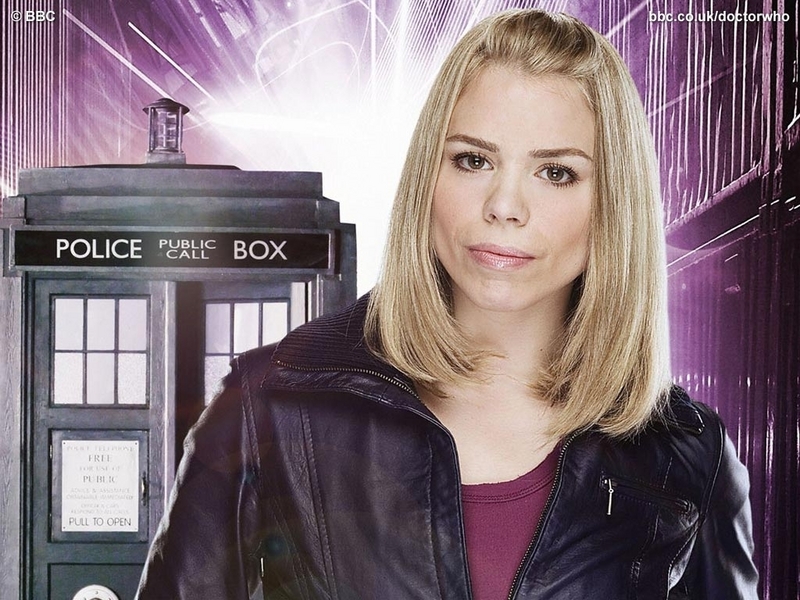
Time And Relative Dimensions in Space (TARDIS). The Tardis is The Doctor’s time machine. On the outside it looks like a little blue phone booth (or a police box to lock criminals into), but on the inside it’s, well, bigger- huge even. There are endless corridors, a library, a swimming pool -oh, it's big. But 99% of the time all the audience sees is the Console Room. Ah, yes. The room with all the moving parts and controls that makes The Doctor jump from one place and time to another.
Let’s travel to 100,000 BC or meet Marco Polo or the see the Aztecs. Let’s go to a planet of mutants or to the Sea of Death or maybe climb aboard an Alien spaceship. Let’s see the French Revolution- All this in just the first season of the 1963 show.
One man and his little blue box- for twenty-six seasons, seven actors took their turn playing The Doctor. The show grew and evolved: sometimes for the better, sometimes for the worse. By 1989 the show had lost many viewers. It’s low-budget sci-fi cheesiness of the last-eighties finally wore too thin and BBC cancelled the show.
Doctor Who was as good as dead. Throughout the nineties, the adventures of The Doctor would be restricted to comic books and audio adventures- with the exception of one made-for-TV film produced by Fox for American audiences (see previous post). It seemed like all hope was lost that Doctor Who fans would ever see the show revived. But remember that a time lord can always regenerate. Let’s take another time jump.

2005: March 26th. Millions of fans eagerly await the transmission of the first Doctor Who episode in 15 years. This isn’t a brand new television show, but a continuation of a forty-year-old series. The new Doctor is played by Chris Eccleston- a man in his forties. He is the Ninth incarnation of the Doctor. The opening credits are rolling and he is about to be Brilliant!
This is where our journey begins. Two weeks from today we will watch "Rose", the first Doctor Who episode of the 21st Century. We will then watch the second episode entitled "The End of the World". Download the first season of the 2005 series and watch along with us!